
Revolutionary Portable MRI Transforms On-Site Medical Care at MotoGP Races
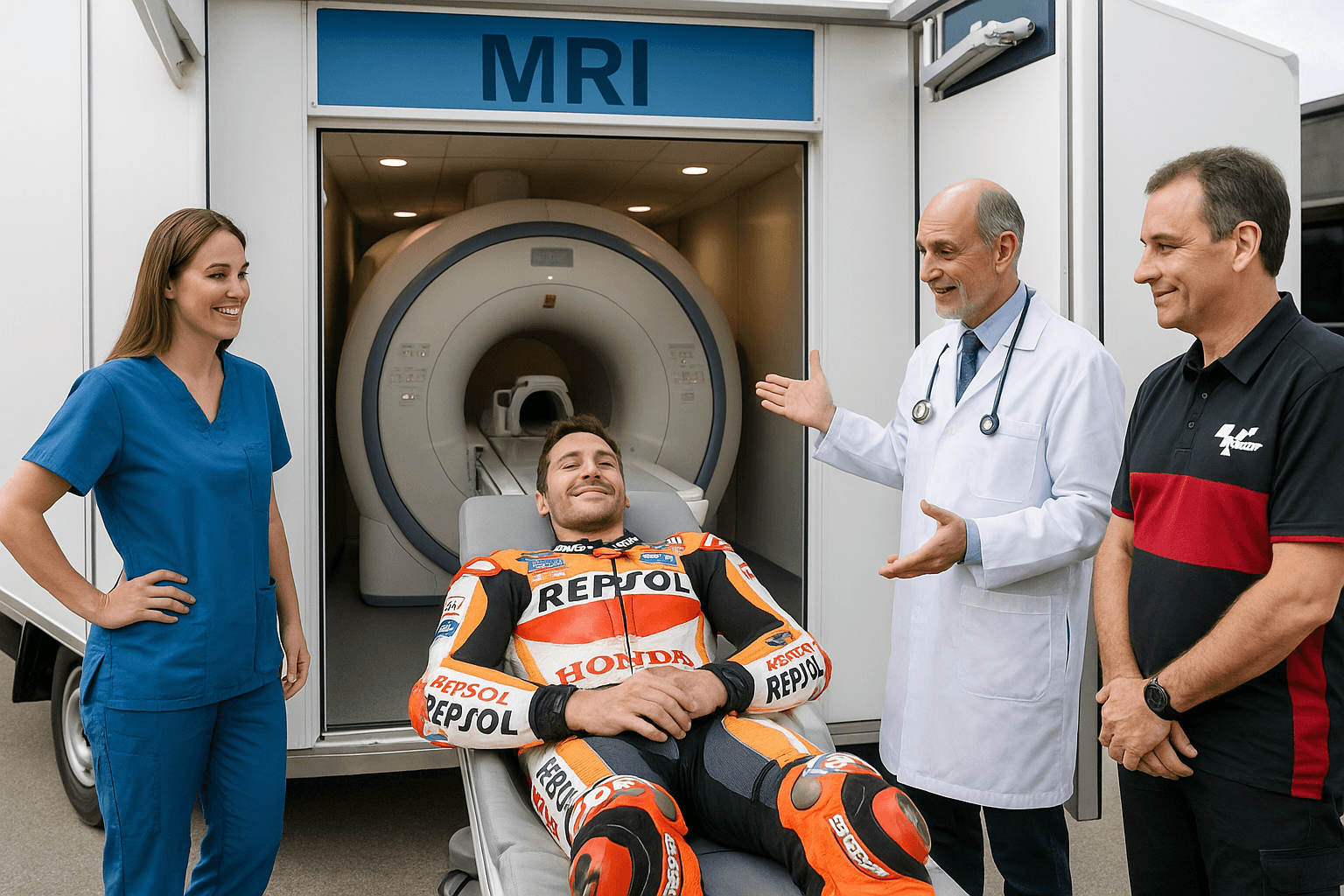
A groundbreaking advancement in medical technology has made its debut on the high-speed world stage of MotoGP racing. In March, a portable, low-field magnetic resonance imaging (MRI) system was deployed at the Grand Prix in Valencia, bringing hospital-grade diagnostic capabilities directly to the trackside for the first time. This innovation marks a significant step in enhancing the quality and speed of emergency care in high-risk sports environments.
Designed to be compact and easy to transport, the MRI unit provided immediate access to detailed imaging of extremity and soft-tissue injuries sustained by riders. Traditional imaging tools such as X-rays often miss subtle issues like ligament damage or early-stage inflammation. In contrast, this mobile MRI successfully identified conditions like fluid buildup, meniscus tears, and arthritis that might otherwise go unnoticed until symptoms worsen.
Medical personnel on-site praised the unit for its ability to deliver rapid and accurate diagnoses. With this technology in place, athletes no longer need to be transported offsite to hospitals for advanced imaging, significantly reducing downtime and enabling faster treatment decisions. In a sport where milliseconds matter and injuries are frequent, having real-time diagnostic tools can make a crucial difference in both short-term outcomes and long-term athlete health.
This mobile MRI system operates at a lower magnetic field strength than traditional hospital machines, which not only lowers costs but also improves safety and flexibility in non-clinical settings. Despite its lower power, clinical teams at the Valencia event confirmed its effectiveness in pinpointing a range of musculoskeletal injuries with remarkable precision.
The success of the portable MRI at MotoGP suggests a promising future for similar deployments across various sports and emergency settings. High-impact competitions like football, rugby, and endurance events could all benefit from on-site imaging, allowing for immediate assessment and reducing the risk of exacerbating injuries due to delayed care.
As the demand for faster, more efficient medical support in athletic competitions continues to grow, the integration of portable imaging systems could become a standard part of sports medicine. The Valencia Grand Prix has set a precedent, and with continued improvements in portability and imaging fidelity, this technology may soon become a fixture at sporting venues around the world, fundamentally changing how athletes are treated and protected during competition.

Texas Recap Contributor
Covers the local desk — breaking news, community reporting, and sport across Texas.
This article features partner, contributor, or branded content from a third party. Members of the Texas Recap editorial staff were not involved in the creation of this content. All views and opinions are those of the contributor alone.
You May Also Like

Dak Prescott Makes Dallas Cowboys History In 37 To 20 Victory Over Washington

Big Tex Returns to Fair Park With a New Look Ahead of the 2026 State Fair of Texas

Ross Fire Reaches Full Containment After Scorching Nearly 90,000 Acres in North Texas

Texas Communities Put Health Education and Prevention in Focus on September 12

Texas Communities Put Health Education and Prevention in Focus on September 12
