
As the 2024 presidential election draws near, the political landscape in the United States has become increasingly charged. A critical point of contention has been the sharp contrast between President Joe Biden’s and former President Donald Trump’s visions for the future. This divide was starkly highlighted during a pivotal presidential debate, where the two candidates clashed on various issues, including the economy, national security, and reproductive rights.
President Biden, appearing confident, touted the successes of his administration, particularly its handling of the COVID-19 pandemic’s aftermath. He pointed to robust economic recovery efforts, including the revitalization of infrastructure, job creation, and major investments in healthcare and clean energy. Biden’s vision for America is one of progressive change, where climate change is addressed head-on, and social services are expanded to benefit all citizens. His platform emphasizes unity and long-term sustainability, advocating for policies that are both economically and environmentally forward-thinking.
In stark contrast, Donald Trump doubled down on his populist rhetoric, insisting that he would “take back the country” from what he described as the “deep state.” His criticism of Biden’s economic policies was relentless, blaming them for the nation’s inflation and what he argued was a decline in traditional American values. Trump promised massive tax cuts, deregulation, and a tough stance on immigration, all of which he believed would return America to its former greatness. For many voters, particularly those disillusioned with the current administration, Trump’s words resonated deeply.
The debate intensified around two key issues: reproductive rights and climate change. Biden, unwavering in his defense of women’s rights, called for protections for reproductive freedom, especially in the wake of the Supreme Court’s controversial decision to overturn Roe v. Wade. Trump, however, downplayed the urgency of climate change, advocating for deregulation as a means to boost economic growth without compromising environmental standards. This ideological divide highlighted the deepening partisan tensions across the country, leaving many voters uncertain about which path to take.
For undecided voters, this debate was a defining moment. It clearly illustrated the stark differences between Biden’s calls for reform and unity, and Trump’s promises to dismantle the existing system. How voters respond to these contrasting visions will likely play a crucial role in shaping the election outcome and determining the direction of American politics.
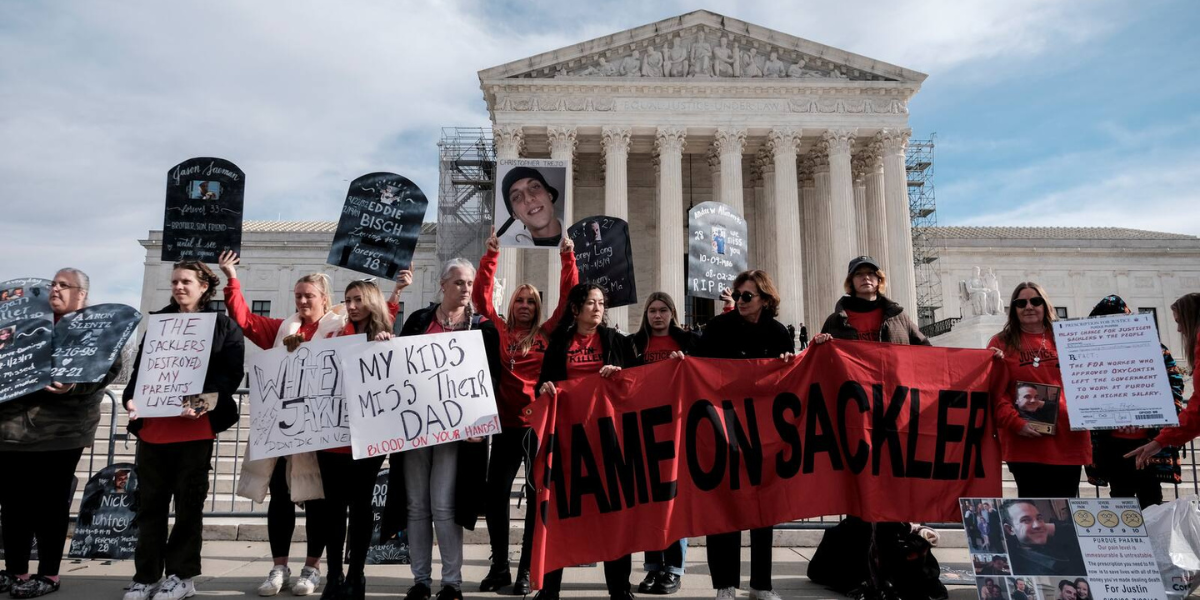
In another significant development, the U.S. Supreme Court issued a major ruling in a case involving Purdue Pharma, a company central to the opioid crisis. The Court, in a narrow 5-4 decision, blocked a controversial bankruptcy settlement that would have granted the Sackler family—owners of Purdue—immunity from future lawsuits related to their role in the opioid epidemic. The Sacklers had proposed a $6 billion settlement to resolve thousands of lawsuits over Purdue’s aggressive marketing of OxyContin, a drug that has been a key driver of the opioid crisis, which has claimed hundreds of thousands of lives.
The decision was met with praise from victims’ families and advocacy groups, who had long argued that the Sacklers should not be allowed to escape accountability for their role in the crisis. Critics had expressed concerns that the settlement would allow Purdue’s owners to retain their wealth while avoiding the legal consequences of their actions. The Supreme Court’s rejection of this settlement has far-reaching implications, particularly for corporate bankruptcies and mass tort cases where third parties seek immunity from future legal claims.
For those affected by the opioid epidemic, the ruling is a significant step forward in the fight for justice. Legal experts believe the decision may pave the way for renewed legal actions against Purdue Pharma and other companies involved in the opioid crisis. While the legal battle is far from over, this ruling represents a major victory in holding corporations accountable for their role in public health crises. It sends a clear message that no entity, regardless of its wealth or influence, is beyond the reach of justice.
