
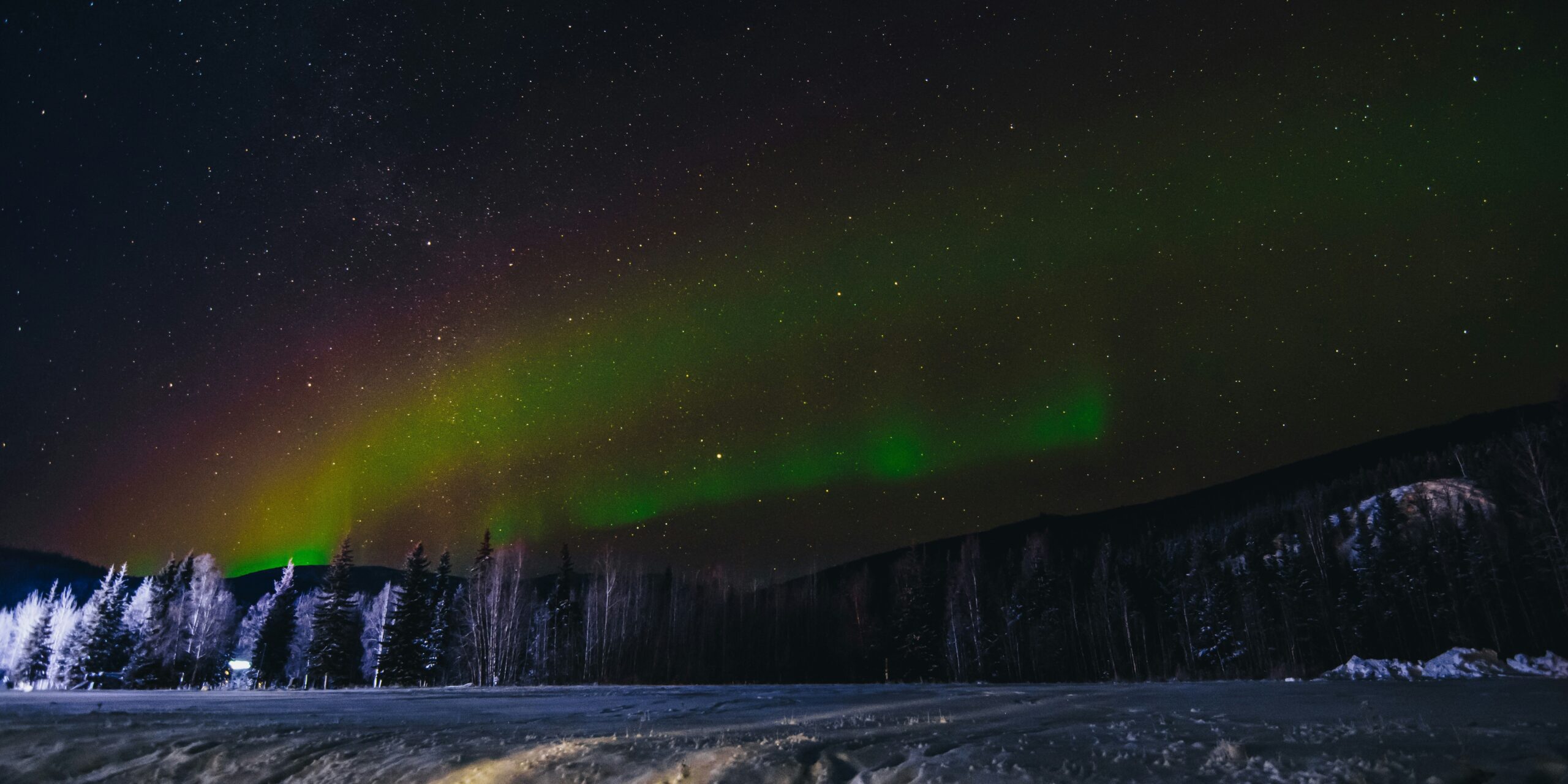
In a dazzling and unexpected celestial event, sky watchers across Texas and more than 17 other U.S. states were treated to a rare glimpse of the northern lights on the night of Tuesday, November 12. This uncommon display, typically reserved for regions much farther north, became visible in southern latitudes due to an intense geomagnetic storm that temporarily extended the auroral oval deeper into the continental United States.
The event was the result of a high-level solar storm classified by NOAA’s Space Weather Prediction Center as a G3 (strong) geomagnetic storm. Such storms occur when high-speed solar wind and charged particles interact with Earth’s magnetic field, energizing the atmosphere and producing colorful auroral activity. The effects can be strong enough to push the visibility of the aurora borealis—usually seen in Alaska, Canada, or Scandinavia—into lower latitudes, including parts of the Midwest, Plains, and South.
Texas, known more for wide star-filled skies than auroras, was among the southernmost states to experience the phenomenon. Visibility reports came in from the Texas Panhandle, rural parts of West and North Texas, and even as far south as the Hill Country. The spectacle was faint to the naked eye in many areas, but long-exposure photographs captured breathtaking ribbons of red and green light stretching across the horizon.
Astronomy experts and meteorologists had advised viewers to look northward after sunset and to seek out dark, unobstructed locations far from urban light pollution. Those with smartphones and tripods were best equipped to catch the subtle hues invisible to the naked eye. Social media quickly lit up with images taken by amateur photographers and stargazers, documenting the experience from backyard observatories, rural highways, and open fields.
“This was an extremely rare opportunity for Texans to witness a northern lights event,” said Jennifer Lowry, a senior atmospheric scientist at Texas A&M University. “We don’t often see auroras this far south. When the conditions align—high solar activity, clear skies, and low light pollution—it becomes a truly memorable moment.”
Local astronomy clubs across Texas, including those in Amarillo, Lubbock, and Midland, had been closely monitoring forecasts in the days leading up to the event. Many enthusiasts organized watch parties or offered guidance on how to best view and photograph the lights. They also cautioned that local conditions—such as cloud cover or haze on the horizon—could affect visibility.
Though the most vibrant displays were reported in northern-tier states like Montana, Wisconsin, and Michigan, the November 12 storm was powerful enough to extend auroral activity all the way to Arkansas, Oklahoma, Missouri, and Texas. NOAA had previously issued a geomagnetic storm watch, alerting viewers to the rare possibility of aurora sightings at lower latitudes.
In an age when urban development and light pollution increasingly obscure the night sky, events like this serve as reminders of the Earth’s dynamic relationship with the sun—and the awe it can inspire. The visual impact of the aurora borealis has been part of human storytelling and mythology for millennia, often symbolizing mystery, change, or wonder.
“This was one of those moments where nature reminds you it doesn’t need a schedule,” said Clara Ruiz, a stargazer from Lubbock who caught the red glow just above the northern horizon. “You just have to look up and be ready.”
While the aurora’s southern appearance is rare, scientists note that we may see more such events in the coming months and years. The sun is currently approaching the peak of Solar Cycle 25, a period of increased sunspot activity that typically leads to more frequent solar storms. These active phases occur roughly every 11 years and are closely watched by space weather forecasters for their impact not just on skies, but also on power grids, satellites, and GPS systems.
Texans and others who missed this week’s aurora may still have chances in the future—especially if they follow solar activity updates and monitor space weather forecasts. For now, though, the November 12 display remains a rare and beautiful moment, captured by those who happened to be in the right place, at the right time, looking north.
